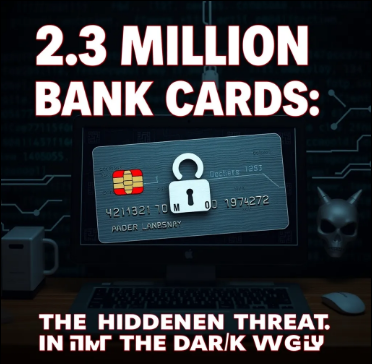
IIn 2023–2024, the world witnessed a significant event that left a deep mark on the digital and financial sectors: over 2.3 million bank cards were stolen and ended up on the black market of the Dark Web. These are not just numbers — they represent a real threat to millions of people, whose money and personal information can now be used for fraud, theft, and other crimes.
Stolen Data: How It Works and Why It’s So Dangerous
According to leading cybersecurity experts, the breach of 26 million devices running Windows became the backdrop for the explosive rise in cases of stolen bank card data. The alarming part is that in one out of every fourteen infections, infostealers — malware aimed at stealing personal information — target users’ banking data. However, this is just the beginning. Malicious software can remain on infected devices for months, or even years, silently collecting and transmitting your data.
Criminals may not start using the stolen cards until long after the infection, meaning that even if your computer was infected a long time ago, you might only discover the theft months or even years later. By that time, the data could already have been sold on the black market, and your financial security may be at risk.
Redline and Risepro: The Programs Cybersecurity Experts Fear Most
Today, one of the most popular malware programs among cybercriminals is Redline. In 2024, it was responsible for 34% of all infections worldwide, rapidly spreading through phishing emails and compromised websites. This virus is particularly dangerous because of its ability to stealthily install itself on devices and collect not only bank card data but also personal passwords, cryptocurrency wallets, and login credentials.
However, a new virus has emerged that poses an even greater threat — Risepro. This infostealer not only targets bank data but also goes after other types of valuable information: cryptocurrency wallets, software keys, and even game mods. With its flexibility and ability to spread through chains of compromised services, Risepro has become one of the hardest-to-detect viruses. It is actively used to gain access to personal data and is then sold on underground markets. This malware does more than just steal information — it can damage devices and lead to significant financial losses.
In addition, Risepro is frequently used to infiltrate corporate networks, putting sensitive information at risk and even jeopardizing company reputations. In 2024, many large corporations already fell victim to these attacks, further highlighting the importance of enhancing cybersecurity measures.
Consequences: How It Affects Real Life
Each data breach is not just a loss of a few thousand rubles or dollars. It can mean the theft of personal savings, the loss of business assets, or even an invasion of privacy. For instance, in one high-profile incident, cybercriminals used stolen data to take out loans in the names of victims. In another case, personal information was sold to third parties for targeted attacks. These threats are becoming increasingly sophisticated and dangerous as methods like phishing and password manipulation are employed.
Criminals often sell your stolen data to others who can later use it for fraudulent activities or other illegal purposes. And here’s the crucial point: your personal information can be used against you for a long time, even if you don’t notice the initial breach.
How to Protect Yourself from Cyber Threats
So, how can you protect yourself in an age of constant threats? First and foremost, it is important to remember that protection starts with you. Here are a few recommendations from Kaspersky experts:
- Two-Factor Authentication: Always enable two-factor authentication for all of your online accounts, including banking apps and cryptocurrency services.
- Regular Device Scanning: Use antivirus software that can detect malicious programs even if they are lurking undetected on your device.
- Monitor Bank Notifications: Regularly check your bank accounts and notifications. This will help you spot suspicious transactions quickly.
- Be Careful with Suspicious Links: Avoid clicking on links in unfamiliar emails or messages, especially if they relate to financial transactions or personal data.
- Use Strong Passwords: Create unique, complex passwords for each account and avoid reusing the same combinations.
Conclusion: Data Protection Is Not Optional — It’s a Necessity
Today, the threat of cybercrime is not a fantasy or something distant. It is a reality that has affected millions of people worldwide. The number of stolen data and bank cards used for fraud continues to rise. And if you want to protect yourself from these threats, you need to act now.
In a world where digital security is becoming an increasingly essential part of our lives, it’s important not only to trust professionals but also to be vigilant yourself, using all available protection tools. Cybercriminals are becoming more sophisticated, and if we are not careful, tomorrow may be too late.