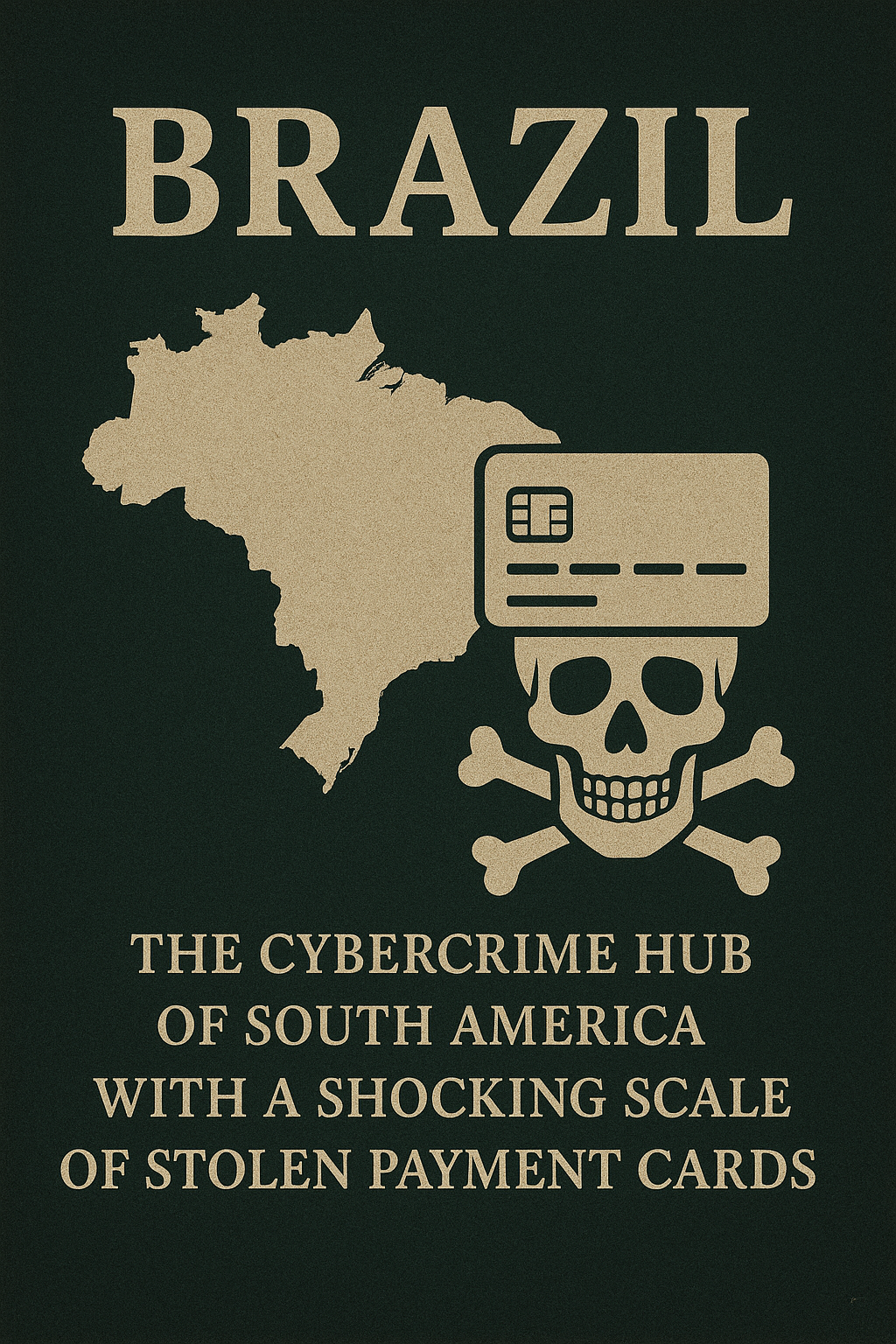
Brazil is not just one of the leaders in the number of stolen cards on the internet; it has climbed to the top spot in South America and fifth place globally, becoming a true hotspot for cybercrime. A study conducted by NordVPN revealed alarming scales of digital attacks: over 176,000 Brazilian payment cards were stolen and sold on the dark web, and an additional 125,000 cards continue to be freely available for purchase on the black market. These cards, sold at an average price of $9.52 each, bring cybercriminals approximately $18.5 million — a staggering amount that underscores the scale of the cyber threats.
The Dark Web as a Source of Digital Threats: How It Works
But that’s not all. The stolen card data isn’t just about the card numbers that are easy to steal. Two out of three stolen cards contain not only card details but also vital personal information: phone numbers, home addresses, and even Social Security numbers. This additional data turns a mere card theft into a serious threat to personal security. Criminals don’t just steal money — they gain access to their victims’ lives and can commit even more sophisticated fraud.
Each of these cases is not just about losing money, but about the destruction of personal security, which makes this problem far more serious than it initially appears.
Global Cybercrime Rankings: The U.S. and Brazil at the Forefront
The research also reveals eye-opening figures regarding global trends in cybercrime. The United States accounts for more than half of all card thefts worldwide, with over 6 million stolen card records. Interestingly, American cards are sold at a low price on the dark web — around $6 each. However, Denmark’s cards are considered the most valuable, with an average cost of 12 reais, making them a target for cybercriminals worldwide.
With a staggering 176,000 stolen cards, Brazil remains the dominant player in South America, while Chile lags behind with 42,000 stolen cards. This situation highlights the high vulnerability of Brazilian citizens and organizations to digital attacks, while regions with lesser cyber threats, such as Russia, are considerably more protected.
Global Security Risks and the Need for Enhanced Protection
The highest risks of credit card theft are observed in countries like Malta, Australia, and New Zealand, while Brazil ranks 38th in terms of risk levels. This concerning trend reinforces that cyber threats are becoming a global issue, and we all need to start seriously thinking about improving our cybersecurity. In a world where card data is worth millions of dollars and fraudsters operate with incredible dexterity, ignoring these threats is becoming increasingly dangerous.
In light of these troubling trends, the risks to both citizens and corporations — who are becoming the targets of digital criminals — cannot be underestimated. This research underscores the need for global strengthening of security measures to protect data and minimize the impact of these attacks.
Conclusion: Cyber Threats in a Borderless World
Card thefts on the dark web have long been a global issue. What started as a local threat to one region has now spread worldwide. Brazil, with its staggering card theft figures, remains at the forefront of this battle, but other countries are not far behind. Facing these figures and such a threat, the global community must come together to protect its digital security and stop the criminals.